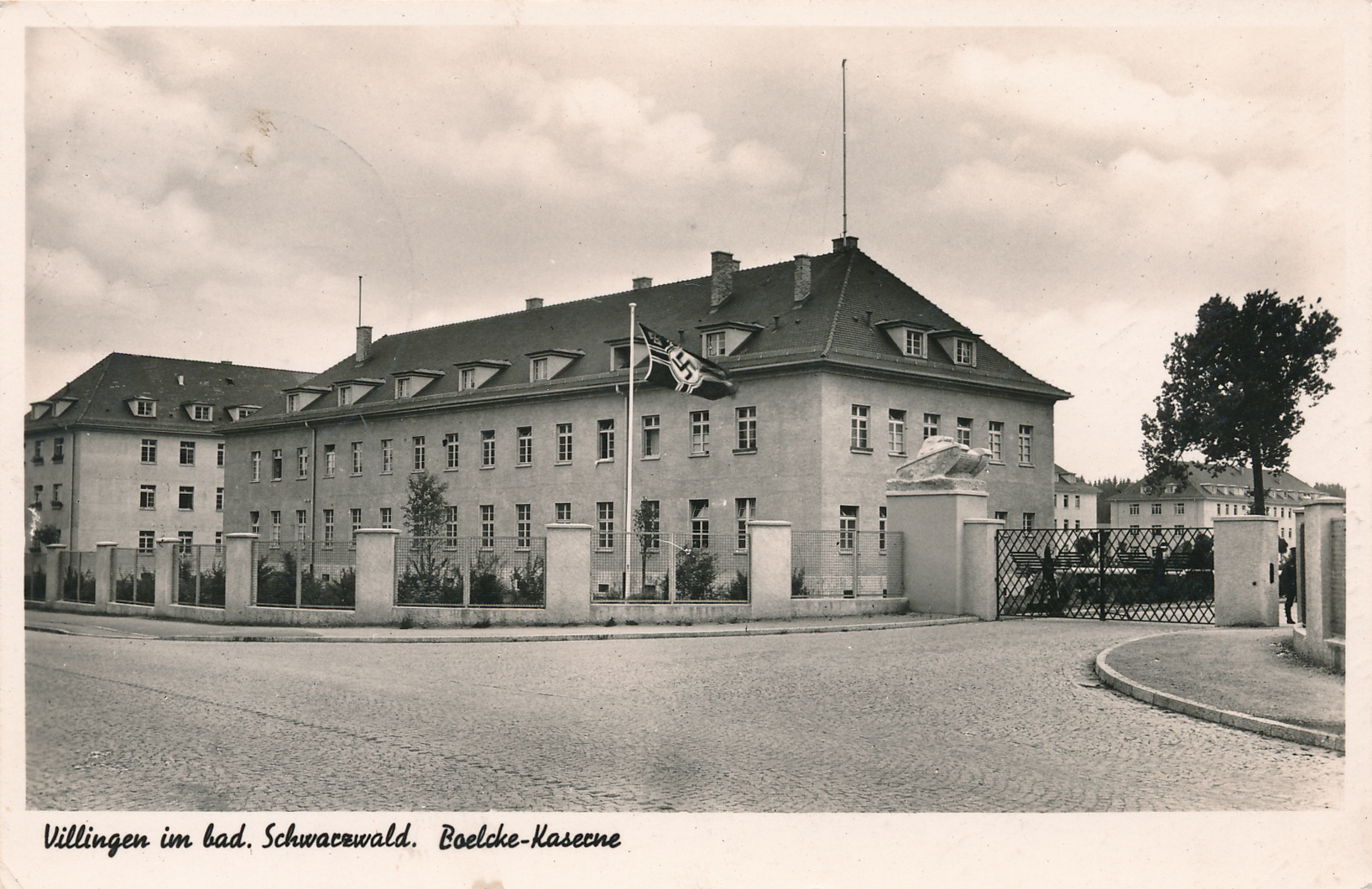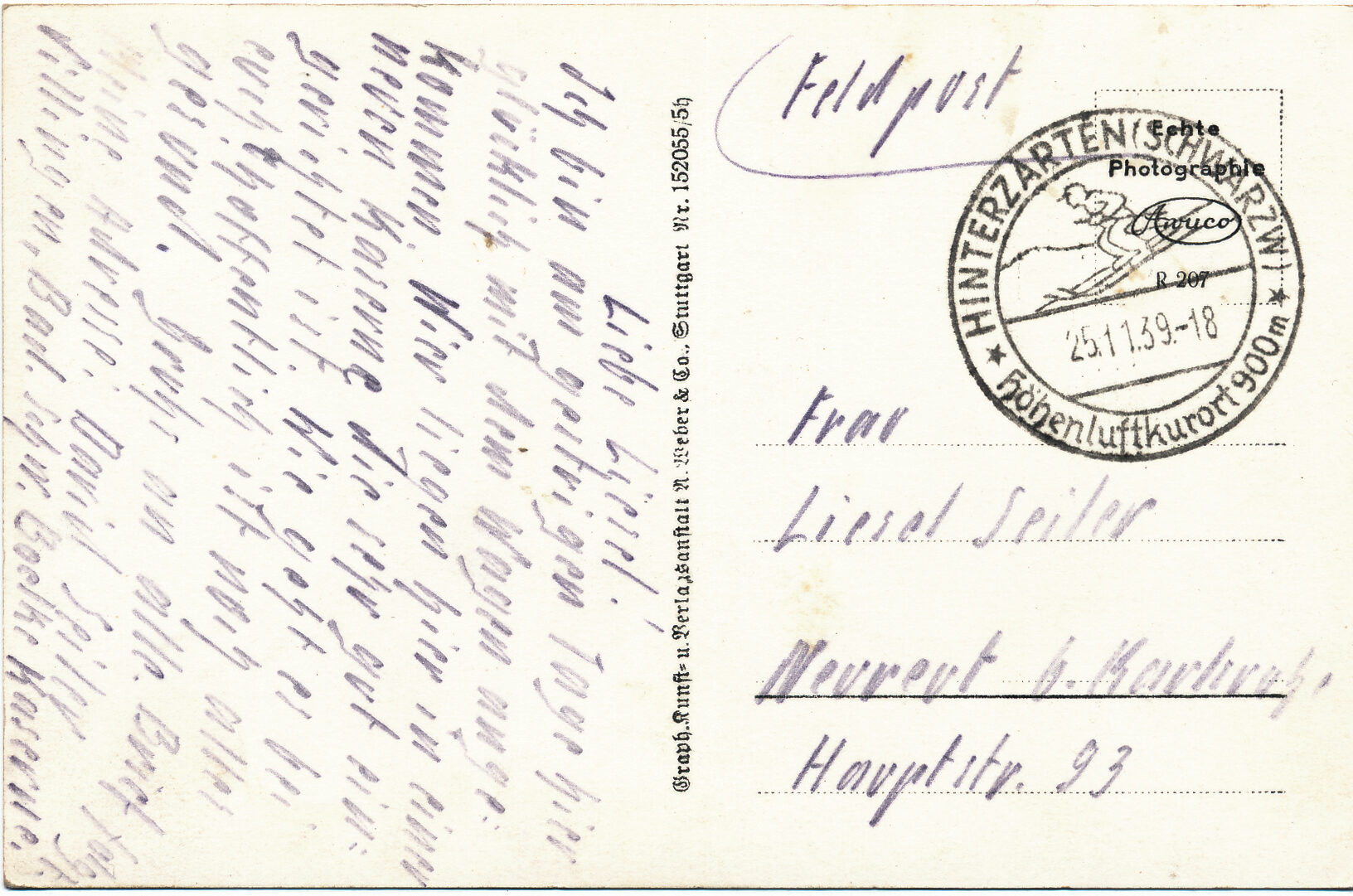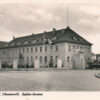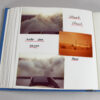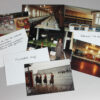
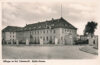
Postcard of barracks in Villingen, 1939

Inv. Nr.: Ü 684

08/2026

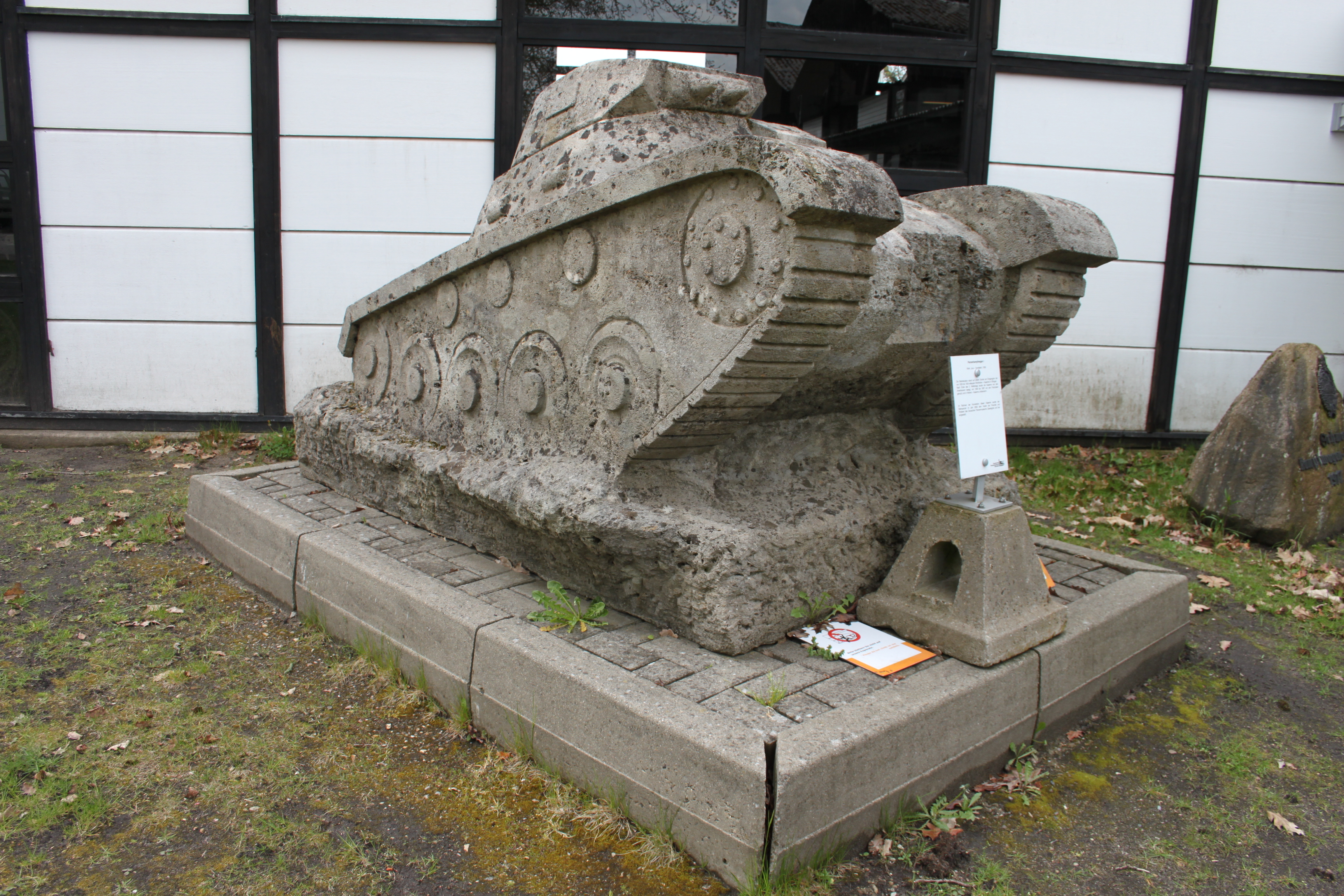
When a Wehrmacht soldier sent this postcard to his family in 1939, the Boelcke Barracks in Villingen, pictured here, had been completed for just under three years. Built as part of the Wehrmacht’s massive rearmament program, it was modern compared to the surrounding buildings of the Imperial Army, and the postcard writer described it as “very well equipped.” In front of the barracks gate stood a sculpture of a Panzer I tank, even though no such vehicle had ever been stationed there.

In 1934, the Heeresbauverwaltung had planned the construction of a “motorized barracks” next to the Richthofen Barracks in Villingen, which had been in existence since the beginning of World War I. It was intended for use by units of the armoured corps, initially known as the “Kraftfahrkampftruppe.” According to a decree issued by the Reichsministerium für Volksaufklärung und Propaganda, new public buildings—including barracks—were to be decorated with works of art. In Villingen, the choice fell on the Wehrmacht’s latest tank model, whose production had begun in 1934. In the spring of 1936, an anti-tank unit moved into the new Boelcke Barracks. This unit originally belonged to an armoured division and deployed anti-tank guns mounted on gun tractors. At the end of 1941, it was placed under the command of the 5th Infantry Division and fought alongside it on the Eastern Front during World War II.

After the war ended in 1945, French occupation forces took over the complex and renamed it “Welvert Barracks.” The French military used the buildings to house active infantry and artillery units, as well as training units. They removed the swastika from the entrance gate, but the sculpture remained in place. After military use ended in 1997, the barracks were to be converted into a residential area. The Panzermuseum acquired the sculpture in 2002 through the mediation of the Friends of the Museum Association. It still stands in the museum’s courtyard today.

This text was automatically translated using AI

Sources


Meyer-Bohde, Thomas: Militärisches Bauen in den 30er und 40er Jahren. Eine Dokumentation der städtebaulichen Strukturen, einzelner Bauwerkstypen und ihrer Teile sowie beispielhafte Lösungen für den Umgang mit der zeitgenössischen Bausubstanz durch die Bundeswehr heute. Berlin/Bonn 2005.

o.A.: Die Geschichte der Panzerabwehr-Abteilung 5 vom 15. Oktober 1945 bis 31 Dezember 1937. Villingen 1937.

Schenkel, Bernd: Die Welvert-Kaserne. Von der militärischen Nutzung zum attraktiven Wohngebiet. Villingen-Schwemmingen 2007.

Object of the month

(short) stories from the depot

Unfortunately, many objects cannot currently be shown in the exhibition for conservation reasons. Here you will find unusual objects and exciting stories of special pieces from the depot